Studying for a test is exhausting. You have to go through your notes, make flashcards or even write practice essay questions. Luckily, a hearing test doesn’t require any studying.
The Hearing Testing Process
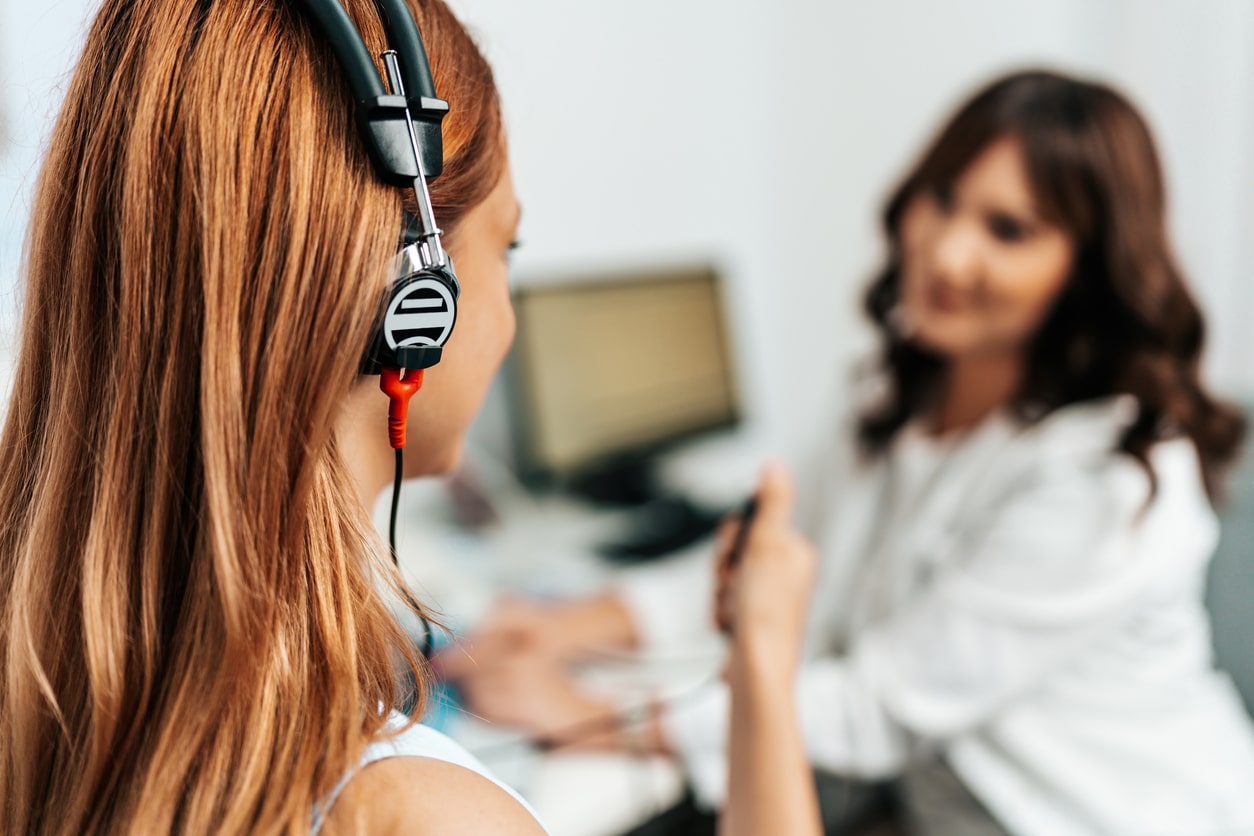
Hearing tests are simple. We’ll have you sit in a quiet room and wear headphones. Next, we’ll play a series of tones through the headphones. The tones will vary in volume and frequency. Whenever you hear a tone, you’ll push a button. After the test, we’ll compare the times you pressed the button to the times we played the tune to determine how loud a sound needs to be for you to hear it.
If a sound needs to be 26 dB or louder for you to hear it, that indicates you have hearing loss.
In some cases, we’ll also conduct speech-in-noise testing and a tympanogram, which measures eardrum movement, to get a wider view of your hearing profile.
The testing process is quick, easy and painless—no test anxiety necessary.
The Importance of Regular Hearing Tests
Hearing loss doesn’t always happen all at once after a serious illness or one-time exposure to extremely loud noise. More often, it develops gradually as you age. In its early stages, we call hearing loss “slight” or “mild.” Although those categories don’t sound bad, even mild hearing loss can interfere with your life. A few ways you might notice hearing loss include:
- You constantly say “What?” or “Huh?”
- You can’t hear high-pitched sounds like birds singing in the Missouri Botanical Gardens or your grandchildren telling you a story
- You struggle to keep up with conversations in noisy environments
- You feel excessively tired after days with lots of meetings
- You socially isolate or feel lonely
If your hearing loss progresses, these effects will move from occasional nuisances to constant troubles. Scheduling regular hearing tests is the best way to catch hearing loss early and treat it with hearing aids before it starts to interfere with your life.
If it’s been a few years since your last hearing test, or you notice any of the above signs of hearing loss, call Center for Hearing & Speech today to schedule an appointment with one of our specialists.